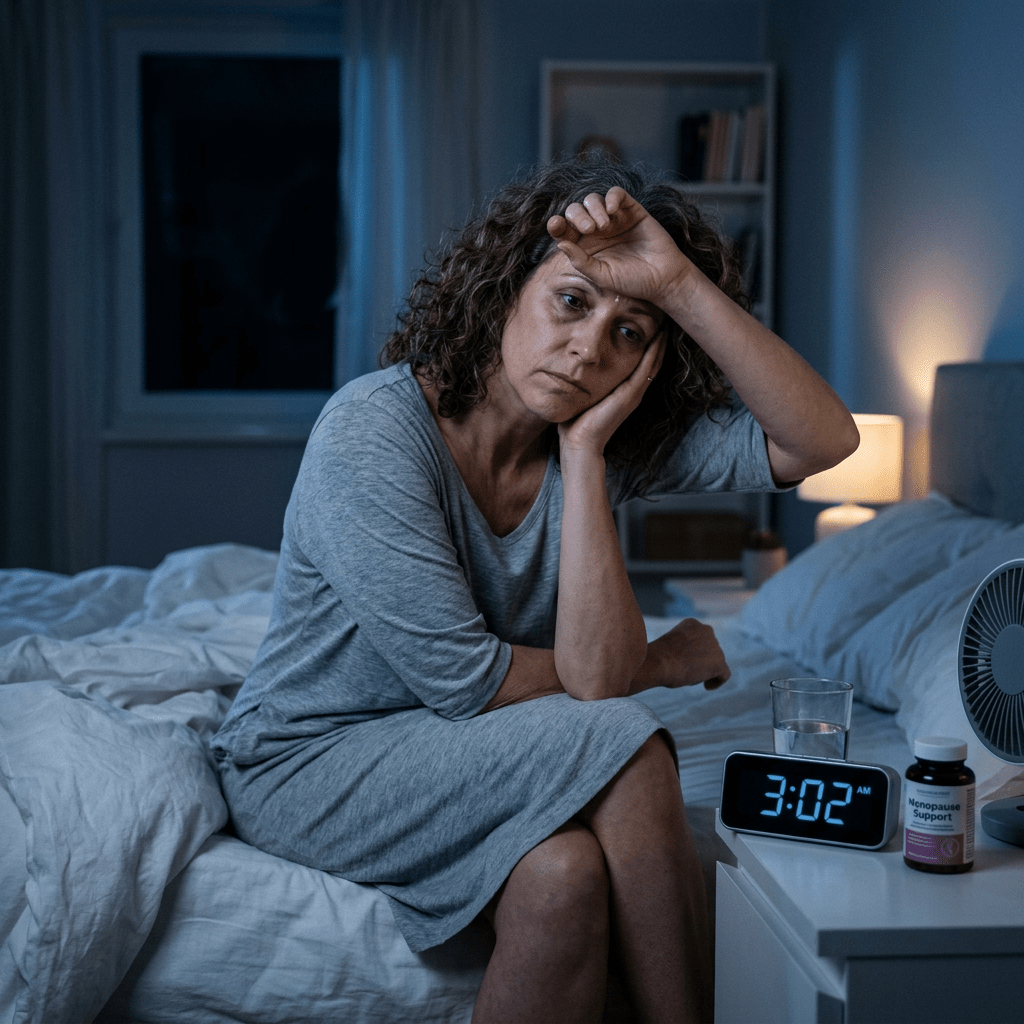
For a long time, I told myself it was normal.
Waking up at 2am.
Then again at 3:30.
Then lying there at 5, half asleep but not really resting.
I didn’t question it that much at first.
I just thought:
This must be what happens as you get older.
The Changes Were Subtle at First
It wasn’t like everything suddenly fell apart.
It was small things.
- I wasn’t sleeping as deeply
- I felt more tired during the day
- My patience was thinner
- I was more easily overwhelmed
Nothing extreme. Just… off.
But when it happens gradually, you adjust to it.
You push through.
Sleep Became Something I Managed—Not Something I Got
I started going to bed earlier.
Trying different routines.
Cutting caffeine.
Doing all the things you’re supposed to do.
And still…
I’d wake up.
Multiple times.
Every night.
And somehow, I convinced myself this was just part of life now.
It Started Affecting More Than Just My Energy
What I didn’t connect right away was how much this was impacting everything else.
My mood.
My patience.
Even my relationship.
When you’re constantly tired:
- you react differently
- you have less tolerance
- things feel heavier than they should
There were moments where I thought:
Is something wrong with us?
Why does everything feel harder lately?
But I didn’t connect it back to sleep.
Or to what might be causing it.
I Never Considered Perimenopause
Because in my mind, that wasn’t where I was.
I was still getting regular periods.
So I assumed:
This can’t be hormonal.
No one had ever explained otherwise.
There’s this idea that hormone changes only matter when your cycle stops.
But that’s not how it works.
What I Didn’t Know
Perimenopause can start years before your period changes.
And one of the biggest signs?
Sleep disruption.
Not just trouble falling asleep—but:
- waking in the middle of the night
- not being able to get back into deep sleep
- feeling wired but exhausted
Looking back, it makes sense.
At the time, I had no idea.
I Thought I Just Needed to Cope Better
So I kept trying to manage it.
Thinking:
- maybe I needed better habits
- maybe I needed to handle stress differently
- maybe I just wasn’t as resilient as I used to be
But the issue wasn’t effort.
It was understanding.
The Shift for Me
Eventually, I started looking deeper into what might actually be going on.
That’s when I learned more about hormone changes in midlife—and how much they can impact sleep.
I ended up exploring Hormone replacement therapy.
Not as a quick fix.
But as a way to support what my body was clearly struggling with.
The Difference Was Noticeable
The biggest change?
I slept.
Not perfectly.
But consistently.
I wasn’t waking up multiple times a night anymore.
And I realized something I hadn’t fully seen before:
I had normalized feeling exhausted.
What That Affects (That No One Talks About Enough)
When your sleep improves, it’s not just about energy.
It’s:
- your mood
- your patience
- your ability to handle stress
- how you show up in your relationships
Things that felt heavy started to feel more manageable.
Not because my life changed overnight—
but because I wasn’t running on empty anymore.
If You’re Waking Up Every Night
And telling yourself:
“This is just part of getting older”
It might be worth questioning that.
Because it might be common—
but that doesn’t mean it’s something you have to just live with.
This Isn’t About Jumping to Solutions
It’s about awareness.
Understanding that:
- sleep changes are real in midlife
- hormones can play a bigger role than we realize
- and there are options worth exploring
What I Wish I Knew Earlier
That waking up multiple times a night wasn’t just something to accept.
That feeling constantly tired wasn’t something I had to push through.
And that things like perimenopause don’t always look the way we expect them to.
If This Sounds Familiar
If your sleep has changed…
If you’re waking up at the same times every night…
If you feel tired no matter what you try…
You’re not imagining it.
And you’re not alone in it.
This Is Part of the Bigger Picture
Midlife isn’t just about one symptom.
It’s how everything connects:
- sleep
- hormones
- mood
- relationships
- energy
And when you start understanding those connections—
things begin to make more sense.
 The Midlife Reset
Leave a comment